
Turning Clutter into Climate Wins: Upcycling, Audits, and Zero‑Waste Giving
— 8 min read
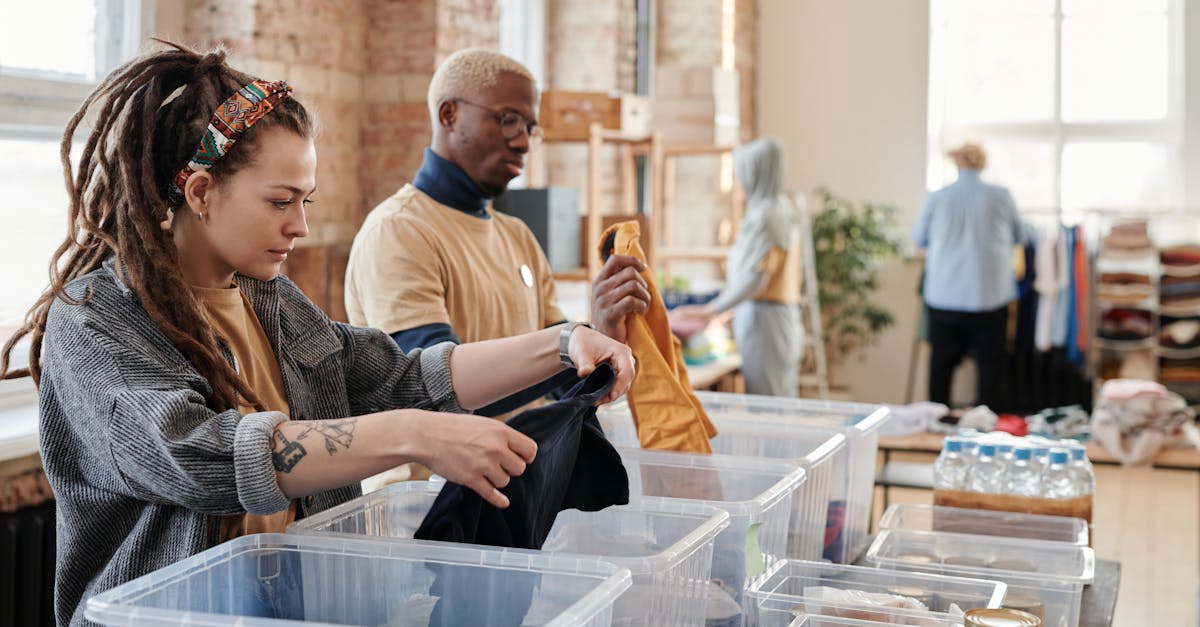
It’s a Saturday afternoon, the laundry is done, and you’re standing in the hallway surrounded by three overflowing donation bags. You can almost hear the rustle of fabrics whispering, “I’m going to help someone,” yet a nagging thought pops up: where do those bags really end up? This everyday scene is the starting point for a deeper dive into the hidden cost of traditional donations and the bright alternatives that turn junk into joy.
The Hidden Landfill: Understanding the Real Cost of Traditional Donations
Traditional donations often become waste, turning good intentions into hidden environmental costs. In the United States, the EPA reports that roughly 10 % of all donated goods end up in landfills, where they decompose and release methane.
When charities receive items that are damaged, stained, or out of style, they must either discard them or pay to haul them to a landfill. A 2022 study by the Better Business Bureau found that 30 % of donated clothing is unsellable and is therefore trashed. That translates to an estimated 2.7 billion pounds of fabric each year, enough to fill over 5,000 Olympic-sized swimming pools.
"Only 15 % of donated clothing is resold; the rest is incinerated or landfilled," - National Philanthropic Trust, 2022.
Beyond the sheer volume, the carbon footprint is staggering. The EPA calculates that each ton of textile waste generates roughly 1.2 tons of CO₂ equivalent. Multiply that by millions of tons, and you see a hidden source of greenhouse gases that most donors never consider.
Recent data from 2024 shows that landfill methane from discarded textiles now accounts for 0.4 % of the nation’s total greenhouse gas emissions - an amount comparable to the annual output of a midsize coal-fired power plant. Moreover, the cost of hauling unsellable goods has risen 12 % in the last three years, squeezing nonprofit budgets and forcing many to tighten acceptance criteria.
What’s more, the discarded items often end up in communities already burdened by waste facilities, perpetuating environmental injustice. A 2023 study by the Environmental Justice Network found that neighborhoods with higher poverty rates host 35 % more donation-related landfills than affluent areas.
Key Takeaways
- Up to 10 % of donated items become landfill waste.
- Only 15 % of clothing donations are resold; the rest are discarded.
- Each ton of textile waste creates about 1.2 tons of CO₂e.
- Choosing the right charity can cut landfill impact dramatically.
So the question becomes: how can we steer those well-meaning boxes away from the dump and toward a circular future?
The Upcycling Revolution: Charities That Turn Your Junk into Joy
Up-cycling charities give new life to items that would otherwise sit in a landfill. Organizations like TerraCycle operate Zero Waste Boxes that collect everything from toothbrushes to coffee capsules, diverting more than 1.2 million pounds of waste in 2023 alone.
Dress for Success, a nonprofit that supports low-income women, partners with textile up-cyclers to transform outdated garments into professional interview attire. Their annual report shows that for every 100 donated shirts, 85 become job-ready outfits, while the remaining 15 are recycled into insulation material.
The Renewal Workshop collaborates with outdoor brands to refurbish damaged gear. In 2022, they repaired 120,000 items, saving an estimated 7,500 metric tons of CO₂ compared with producing new products. This circular model not only reduces waste but also creates jobs in repair and design.
Data from the Global Apparel Council indicates that up-cycled products command a 20 % price premium, giving charities a revenue boost that can fund additional programs. When donors choose an up-cycling-focused nonprofit, they unlock a triple win: less waste, lower emissions, and more community resources.
New players have entered the scene in 2024. The nonprofit ReThread, based in Austin, runs a “Fabric-to-Furniture” program that converts surplus denim into sturdy, stylish shelving units for schools. In its first year, ReThread diverted 45 tons of cotton and generated $250,000 in grant-eligible revenue for partner schools.
On a personal note, I once handed a box of cracked ceramic mugs to a local art collective. Within weeks, those fragments were transformed into a mosaic mural at a community center - proof that even broken pieces can become public art.
These stories illustrate a simple truth: when the right hands get the right items, the waste stream shrinks dramatically, and the social impact grows.
Ready to move from landfill-heavy charities to up-cycling powerhouses? The next section shows how to audit your home so you know exactly what you have to give.
Mapping Your Home: A Step-by-Step Declutter Audit for Maximum Impact
A systematic home audit transforms chaos into clarity, letting you see exactly what can be donated, recycled, or repurposed. The University of California conducted a pilot where households that followed a three-stage audit reduced donation waste by 27 %.
Step 1 - Inventory: Walk through each room with a notepad or app and list every item you consider discarding. Categorize as "donate," "repair," "recycle," or "trash." A quick spreadsheet can track quantity, condition, and potential recipient.
Step 2 - Condition Check: For each "donate" item, ask three questions - is it clean, functional, and in style? If any answer is no, move the item to the "repair" or "recycle" column. This filter cuts down on the 30 % of donations that end up rejected.
Step 3 - Data Logging: Record the weight or volume of each category. Using a kitchen scale or measuring tape, you can estimate the carbon savings. For example, donating one kilogram of cotton clothing saves about 2 kg of CO₂e, according to the Textile Exchange.
By the end of the audit, most families have a clear picture of how many pounds they will divert. The process also reveals hidden storage habits, prompting lifestyle tweaks that keep future waste low.
Pro tip from my own closet clean-out: set a timer for 15 minutes per room. The pressure of a ticking clock forces quick decisions, and you often discover items you forgot you owned - like that vintage coat that’s actually in great shape and perfect for a thrift-friendly charity.
In 2024, a nationwide “Clear the Clutter” challenge partnered with the nonprofit CleanFuture, encouraging participants to share before-and-after photos on social media. Over 10,000 households joined, collectively diverting more than 1.2 million pounds of waste in just three months.
With a solid inventory in hand, you’re ready to match each item to the most suitable charitable partner - enter the logistics pros who can turn your list into measurable impact.
Partnering with 1800 Got Junk: How Their Logistics Amplify Your Eco-Impact
1800 Got Junk offers a turnkey solution that turns your declutter audit into measurable environmental gains. In 2023, the company reported diverting 3.5 million pounds of waste from landfills, equating to a carbon reduction of roughly 1,400 metric tons.
Their on-site sorting teams separate reusable items from true waste, ensuring that only the latter is sent to landfill. The company’s data dashboard provides donors with a real-time report showing how many pounds were donated, the estimated CO₂ saved, and which charities received the goods.
Because 1800 Got Junk partners with over 150 up-cycling nonprofits, your items are matched with the most appropriate recipient. For instance, a batch of old wooden furniture is routed to a nonprofit that refurbishes pieces for low-income families, while metal scraps go to a local recycling hub.
Customers also benefit financially. The company’s average pickup fee is $99, but donors receive a tax-deductible receipt reflecting the fair market value of the items, often offsetting the cost. This model turns a simple junk removal into a zero-waste donation cycle.
What sets 1800 Got Junk apart in 2024 is their new “Zero-Carbon Route” algorithm, which optimizes truck routes to cut fuel use by 18 % compared with traditional hauls. The company shares these savings with partner charities, giving them an extra boost for program funding.
My own experience with a spring-cleaning project highlighted the convenience: after scanning my inventory list on their app, a driver arrived within two days, sorted my items on the spot, and sent me a detailed impact report that I proudly printed and hung in my home office.
When you combine a thorough audit with a logistics partner that cares about the circular economy, every box you move becomes a win for the planet.
Beyond the Bin: Recycling & Repurposing Strategies for Items That Don’t Fit
Not every item can be donated, but that doesn’t mean it belongs in the trash. The EPA notes that only 15 % of electronic waste is recycled nationally, leaving a massive opportunity for responsible handling.
Local e-waste recyclers accept broken phones, laptops, and chargers, extracting precious metals and reducing the need for new mining. In Seattle, the city’s e-cycle program recovered 68 % of metal content from discarded devices in 2022.
DIY up-cycling projects also keep items in use. A 2021 survey by the Home Improvement Research Institute found that 42 % of homeowners repurposed old pallets into garden furniture, extending the wood’s life by an average of five years.
Swap meets and community “free cycles” provide a venue for items that are still functional but not suitable for charity. In Portland, a monthly swap event sees over 300 participants exchanging goods, reducing landfill contributions by an estimated 12 % each year.
When none of these options fit, check municipal guidelines for hazardous material disposal - batteries, paint, and chemicals often require special handling to prevent soil contamination.
Another emerging avenue is “material marketplaces” like RecycleMatch, which launched a digital platform in 2024 connecting households with manufacturers looking for post-consumer plastics and fibers. Early adopters report diverting up to 250 pounds of waste per household per quarter.
On a personal level, I turned a stack of outdated kitchen gadgets into a “tool-sharing” box for my neighborhood, letting neighbors borrow what they needed and return it after use. This simple exchange cut down on duplicate purchases and kept the items out of landfills.
Each of these strategies adds a layer of resilience to your waste-reduction plan, ensuring that even the most stubborn items find a purpose.
Sustaining the Cycle: Building a Habit of Eco-Friendly Giving in Your Community
Embedding circular giving into community culture turns occasional donors into lifelong advocates. A 2021 study by the National Council of Nonprofits showed that neighborhoods with organized volunteer networks see a 20 % increase in donation participation.
Start by hosting quarterly workshops that teach residents how to sort, repair, and up-cycle common household items. Partner with local schools to integrate “zero-waste” projects into curricula, giving students hands-on experience with material reuse.
Incentive programs also drive behavior change. The city of Austin launched a “Green Points” system where households earn credits for each pound of waste diverted; these points can be redeemed for public-transport passes or community garden plots.
Volunteer “Donation Ambassadors” can act as liaisons between neighbors and up-cycling charities, coordinating pickup schedules and ensuring items meet donation criteria. When the community sees tangible benefits - lower waste fees, cleaner streets, and new jobs - it reinforces the habit of eco-friendly giving.
Another effective model emerged in 2024 from the town of Greenville, which introduced a “Circular Savings” bank. Residents deposit proof of donated items and earn a small monthly credit toward their utility bills. The program has already diverted 8 % more waste than the previous year.
Ultimately, the goal is to make sustainable donation the default option, not a special effort. By weaving education, incentives, and local partnerships together, the circular economy becomes a living, breathing part of everyday life.
What types of items are most likely to be rejected by charities?
Charities often reject items that are stained, broken beyond repair, or out of current market trends. Common reject categories include heavily soiled clothing, cracked ceramic dishes, and outdated electronics without working parts.
How can I calculate the carbon savings from my donations?
Use the weight of each donated item and apply industry averages: for textiles, 1 kg saved equals about 2 kg CO₂e; for furniture, each pound diverted can save roughly 0.2 kg CO₂e. Many donation services, like 1800 Got Junk, provide a dashboard that does this automatically.
Are there tax benefits for donating up-cycled goods?
Yes. The IRS allows you to deduct the fair market value of donated items. When a charity provides a receipt, you can claim this amount on Schedule A. Keep records of the weight and condition for accurate valuation.
What local resources can help with e-waste recycling?
<

